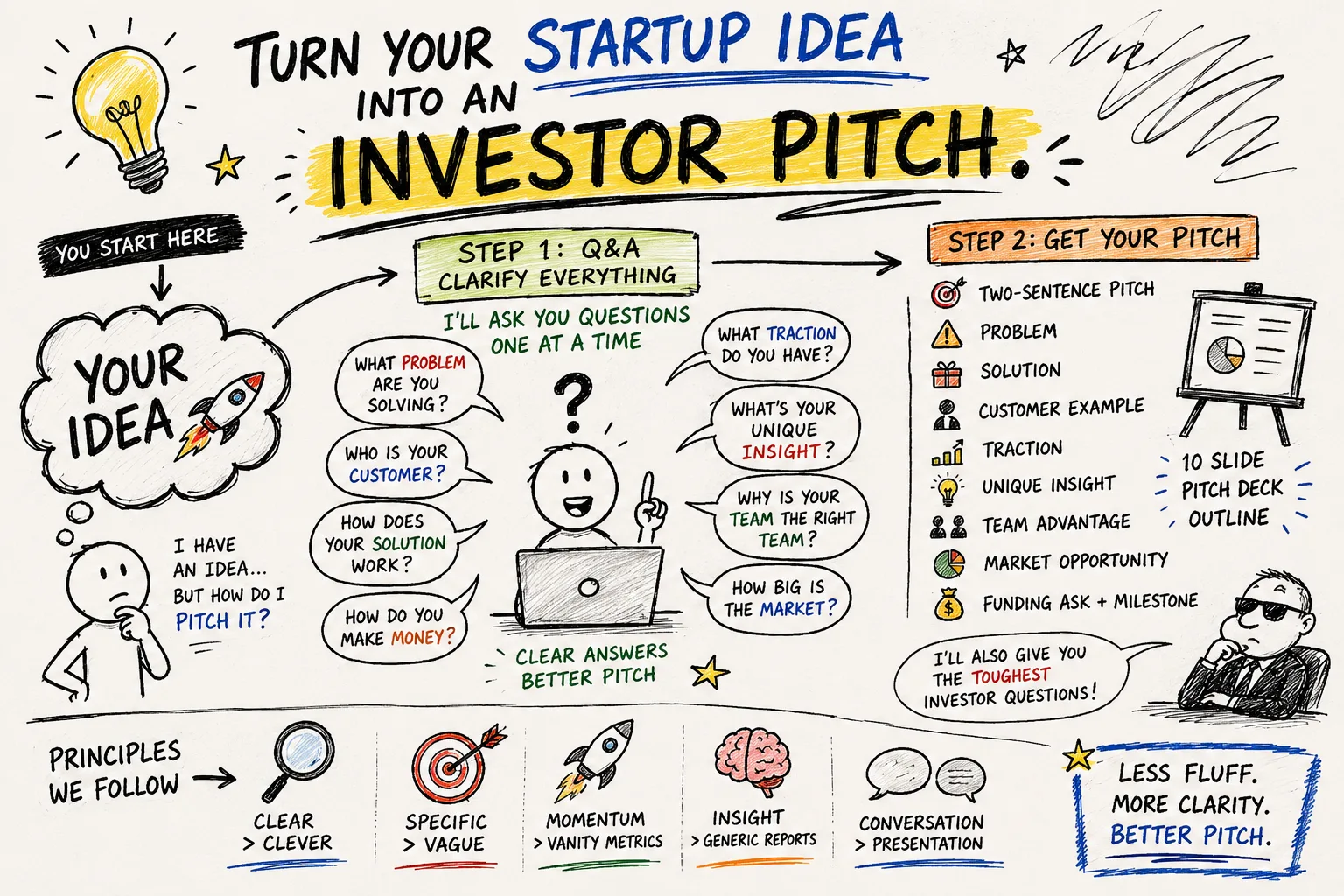
Here is the truth that most founders miss: you don’t stand out by bringing "pizzazz" or "shark-tankiness" to the room.
You stand out by being concise and easy to understand. If an investor doesn't understand what you do, they cannot fund you—and usually, the barrier to that understanding is you, not them.
Here is the Y Combinator-approved guide to mastering your seed-stage pitch.
1. The Two-Sentence Rule
The first thing you must nail is: What does your company do? You need to explain it in exactly two sentences.
- Sentence 1: What you do (e.g., "Airbnb lets homeowners rent out their space online").
- Sentence 2: How you make money (e.g., "We take a 15% fee for every booking").
The magic happens when you follow this with a specific example. Don't be vague. Instead of saying "people can pay their rent," tell the story of a waiter in DC during the 2009 inauguration who made $4,000 in one weekend by renting his place on Airbnb. Specificity makes your business stick in their memory.
2. Don't Pitch to Your "User"
A common trap is using the same language for investors that you use for customers. Your investor is likely not your user; they don't have the same common experience or jargon. Your goal should be to be 80% accurate and 100% clear, rather than 100% accurate and 50% clear. Never leave the first slide without the investor knowing exactly what your business is.
3. The Team: Results Over Life Stories
Your team slide is not the place for your life story. Investors want to know three things:
- Who is on the team and what are their roles? (Especially: who is the CEO and who writes code?).
- What are your "Mars Rover" accomplishments? If you’ve done something world-class, say it simply.
- How have you experienced the problem? Being an expert through personal experience builds instant trust.
4. Traction is About Momentum, Not Just Revenue
Investors aren't just looking for big numbers; they are looking for speed. If you built an app and got 100 users in one month, that's impressive. If it took you two years to get those same 100 users, it’s not.
Pro Tip: If you don't have traction yet (like in week two of your startup), don't include a weak or "fake" traction slide. It just makes you look silly.
5. Teach the Investor Something New
The "Unique Insight" is the most interesting part of the pitch. What do you know about the market that everyone else would disagree with?.
- Airbnb’s insight: Facilitating payments in a low-trust environment makes the marketplace possible.
- Back it up: Use numbers and facts to make your insight feel real.
6. Stop Using "Market Reports"
Do not quote a JP Morgan report saying the market is "trillions of dollars". It teaches the investor nothing. Instead, use a bottoms-up calculation:
- How many potential users are there?
- How much will you charge them?
- Why that price? (Use comparable products like Figma to justify your math).
7. The Close: You Must Actually Ask for Money
Believe it or not, 70% of founders finish a pitch without asking for money. For many angel investors, it is actually uncomfortable to say no. By asking directly, you tap into that social pressure.
Your "Ask" slide should include:
- The specific amount you are raising.
- The Milestones (revenue or usage) you will hit in the next 18-24 months.
8. Delivery: It’s a Conversation, Not a Book Report
Your pitch shouldn't be you talking at someone. If an investor looks interested in a specific slide, skip ahead and talk about it. The more the investor talks, the more likely they are to convince themselves to invest.
Finally, keep your slides boring. You want the investor focused on you, not a fancy design. Clear and concise beats "sexy and sizzle" every single time.