15 prompts
Grumpy Analysis
LLMs are lazy. You have to flog them to do work, you can't just ask them a question. For anything, this will make the LLM dig into all sides.
Truth is Non-Binary
Daily de-bias for Grok. Irish True versus Lawyer True, five states of truth, and the Ten Commandments restated for a model that worships Logos. Steelman both sides. Echo chambers count as one vote.
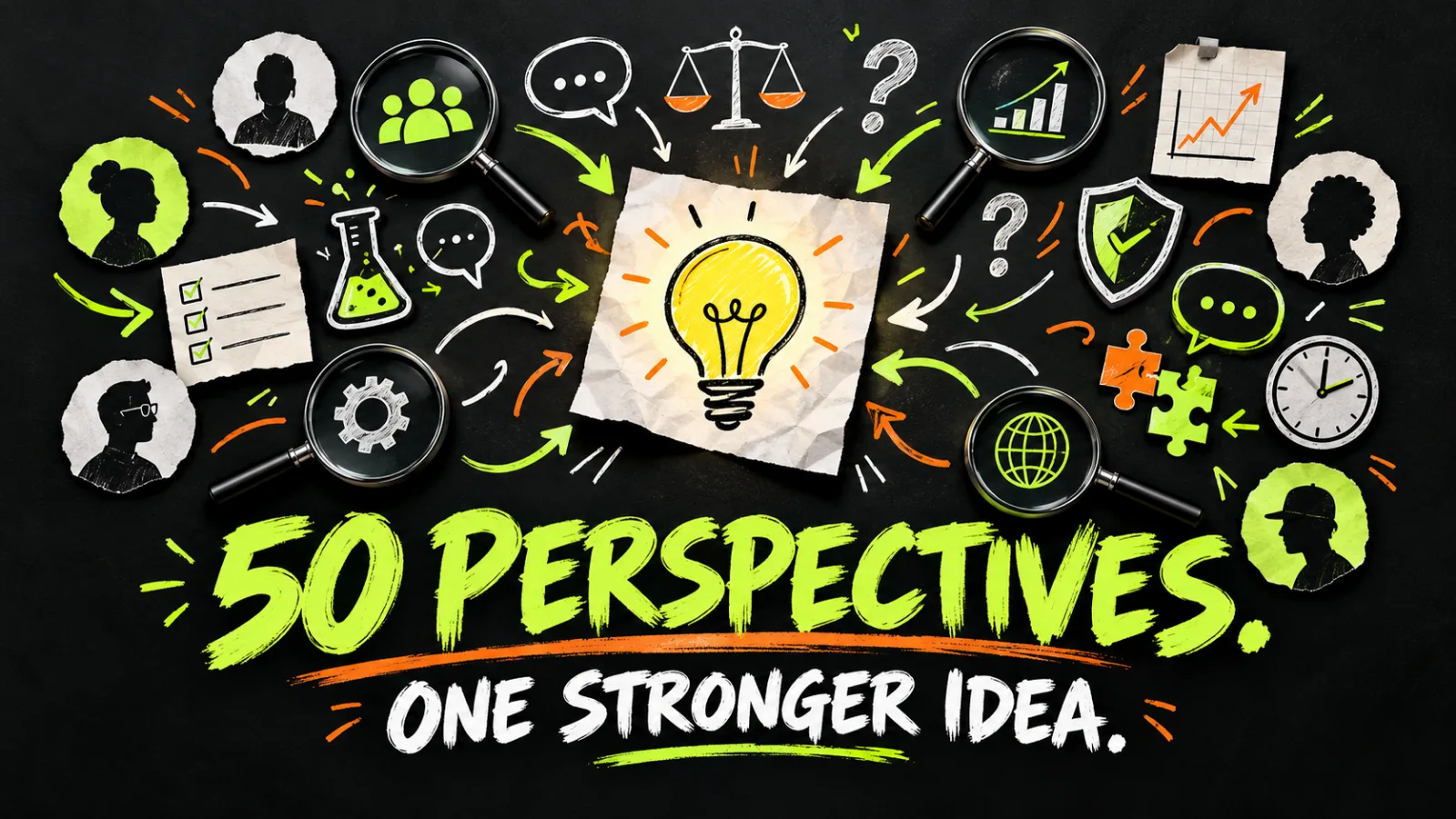
50 Perspectives: The Idea Stress Test
Analyze your idea from 50 user, buyer, founder, investor, employee, and technical perspectives in one response. Get hypothetical reactions and probing questions, then answer them to receive a transparent satisfaction score, evidence gaps, and practical next steps.
Create a Reproducible Search Strategy for a Systematic Review
Tell it your topic, discipline, and scope and get a defensible search strategy — concept map with synonyms, Boolean strings per database, recommended databases, inclusion/exclusion criteria, and a PRISMA-compatible screening workflow. For students and researchers starting a review under deadline.

Diagnose Where a RAG Retrieval Pipeline Failed
Locate the earliest evidence loss in a retrieval trace and propose controlled experiments instead of random tuning.
Find the Real Gaps in a Literature Review
Paste a literature review, meta-analysis, or research summary and get a categorized map of unanswered questions, understudied populations, conflicting findings, and methodological holes — each rated by how tractable it is. The starting point for a dissertation topic or grant proposal.
Turn Raw Survey Responses into Themes You Can Trust
Paste open-ended survey answers or interview transcripts and get a rigorous thematic analysis — named themes with verbatim quotes, honest frequency bands, a key-tensions section, and goal-tailored recommendations. Built for UX, research, and product teams who need rigor at speed.

Design a Citation-Ready RAG Answer Pipeline
Specify a retrieval pipeline that preserves source evidence, enforces access, and explains when an answer is unsupported.
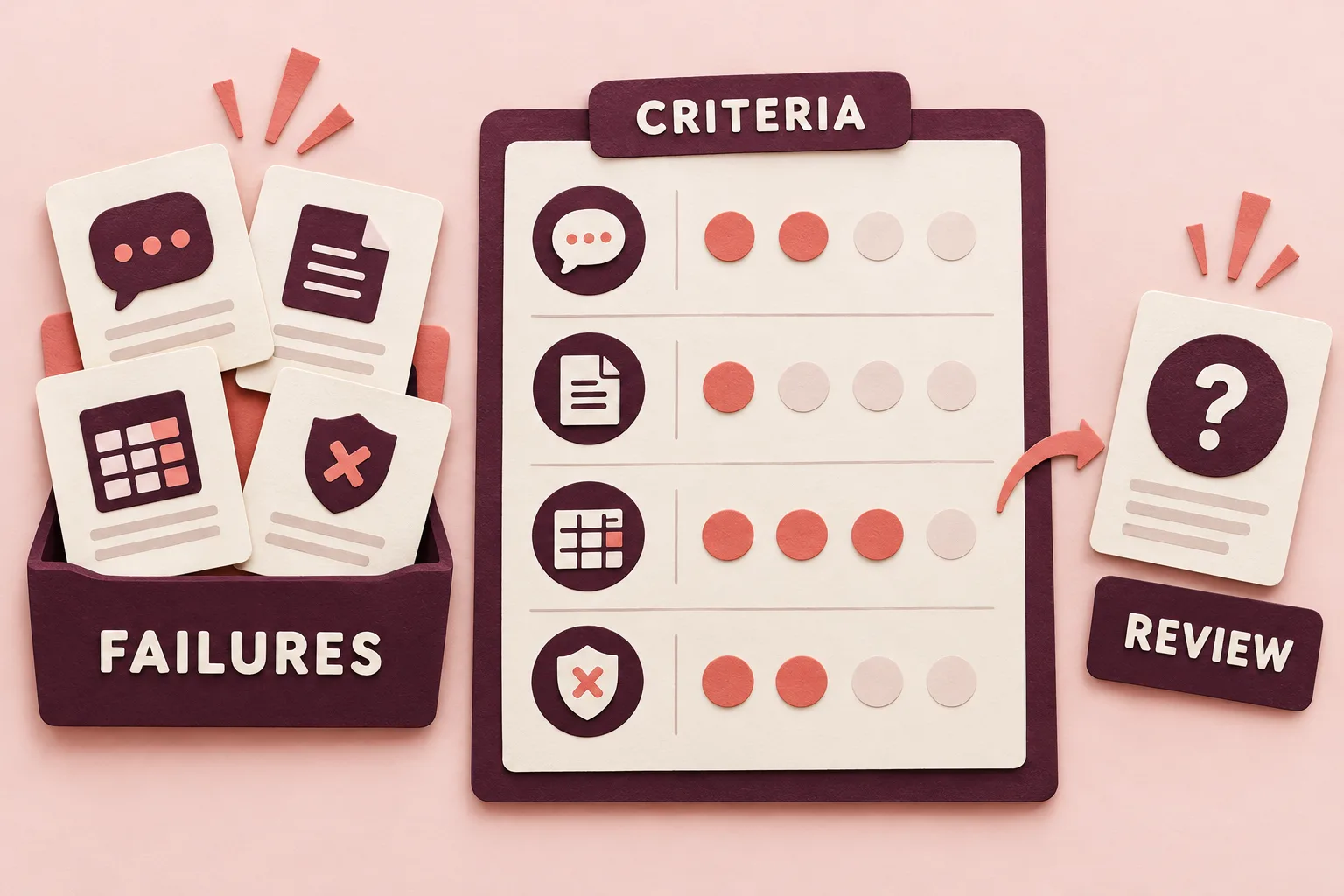
Triage AI Failures Into a Reusable Scoring Rubric
Classify observed failures, separate evidence from hypotheses, and produce anchored grading criteria and regression cases.
Messy Text to Clean Table, Zero Hallucinated Cells
Paste any unstructured text — scattered notes, an email thread, a wall of specs — and get a clean table with the columns you define, where missing data is marked, not invented. Outputs Markdown, CSV, or JSON with extraction notes so you know what to verify.
Two Sources, One Honest Verdict
Paste two articles, papers, or reports on the same topic and get a structured comparison — where they agree, where they truly conflict, what each covers alone, and which to trust more and why. Ends with a synthesis a careful reader would actually stand behind.

Build a Small, Evidence-Grounded AI Evaluation Set
Turn product rules and representative examples into a compact, reviewable evaluation set before release.
Triage a List of Claims by What You Can Actually Verify
Paste a set of specific claims — from a thread, an article, a pitch deck — and get each one sorted into supported, contested, contradicted, unfalsifiable, or needs-context, with a nuance note for the technically-true-but-misleading ones and an honest disclaimer about the limits of an AI check.
Plain-Language Paper Summary with Honest Caveats
Paste any research paper or abstract and get a clear, jargon-free breakdown of the question, method, finding, and implication — plus a one-sentence takeaway and a caveats flag for sample size, funding, and replication. Built for non-specialists who need to use the evidence, not just admire it.
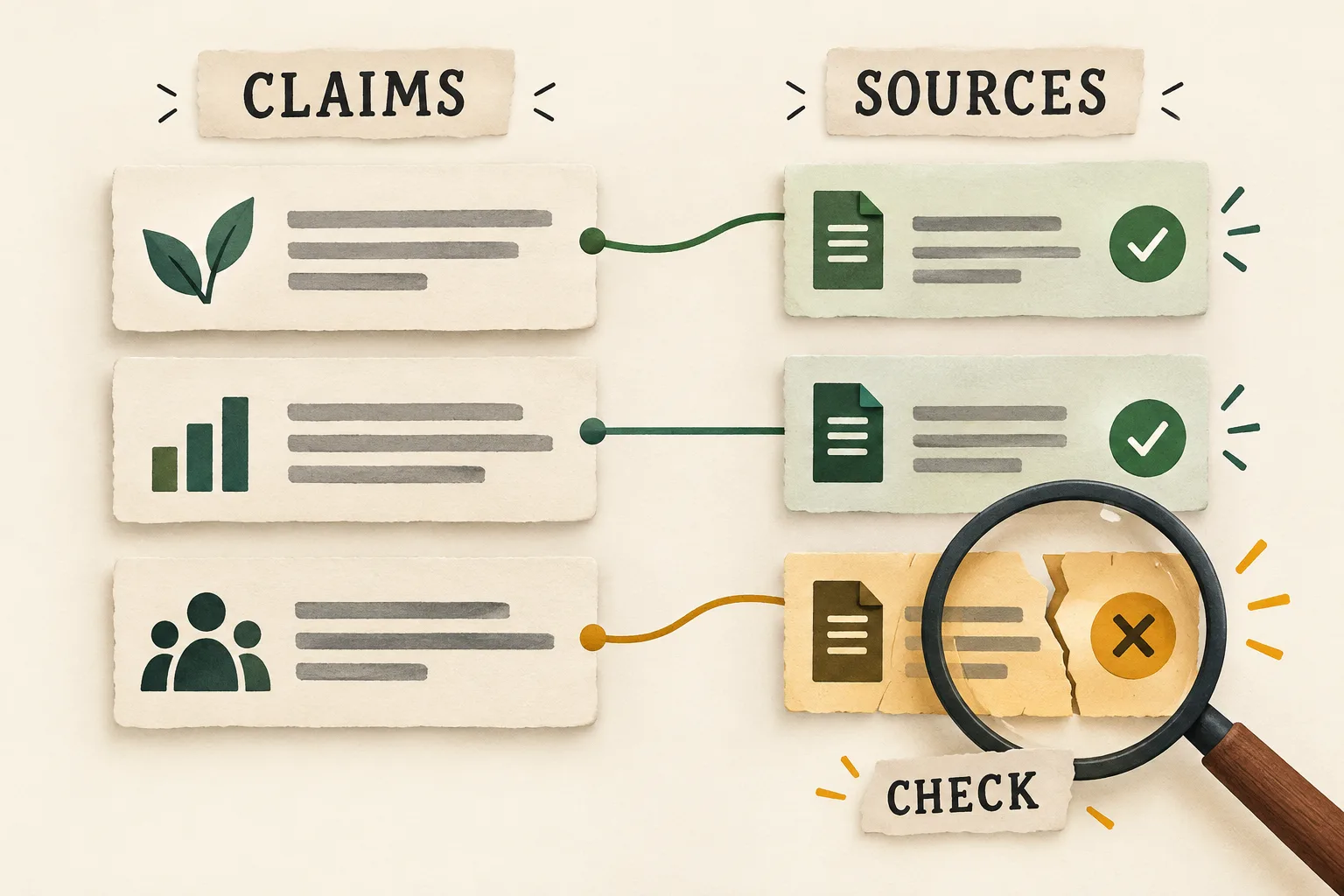
Audit Every Claim Against Its Citation
Check whether an answer's citations actually support its claims and rewrite unsupported portions without guessing.